
- English
- 简体中文
- tiếng Việt
- Indonesia
- שפה עברית
- Hrvatski
- Malti
- lugha ya Kiswahili
- Hausa
- Монгол хэл
- O'zbek
- Հայերեն
- Español
- Português
- русский
- Français
- 日本語
- Deutsch
- Italiano
- Nederlands
- ภาษาไทย
- Polski
- 한국어
- Svenska
- magyar
- Malay
- বাংলা ভাষার
- Dansk
- Suomi
- हिन्दी
- Pilipino
- Türkçe
- Gaeilge
- العربية
- Norsk
- český
- ελληνικά
- український
- Javanese
- فارسی
- Burmese
- български
- ລາວ
- Azərbaycan
- Slovenský jazyk
- Lietuvos
- Eesti Keel
- Română
- Slovenski
- தமிழ்

The most easily overlooked source of failure in laser cutting air supply systems: screw air compressor.
In laser cutting workshops, over half of the abnormal downtime stems not from the laser or the cutting head, but from the compressed air system.
We have numerous laser cutting cooperation cases, including factories in Southeast Asia, the Middle East, and Africa, and have seen laser cutting workshops with various configurations. Regardless of location, the problems caused by compressed air are almost identical. Today, we won't discuss what air compressors can do or the concerns factories have; instead, we'll talk about the issues that give you the biggest headaches when you get a call in the middle of the night.
Issue 1: Burrs and slag on the cut surface, after investigation, the cause was found to be unstable gas pressure.
This is the most easily misdiagnosed fault. The cut surface turns yellow and burrs increase; the first instinct is to adjust the focus, change the nozzle, and check the lens. But after a lot of work, it turns out to be useless—the real reason is that fluctuations in the supply gas pressure cause unstable auxiliary gas flow.
Laser cutting requires stable, dry, and continuous auxiliary gas.
We conducted a field test at an automotive parts factory in Thailand: a standard industrial frequency screw air compressor, with the gas tank outlet pressure set at 0.8MPa, experienced actual pressure fluctuations between 0.72-0.85MPa during the loading and unloading cycle. Under the same cutting parameters, the burr height of parts cut during low-pressure periods was 0.15mm higher than during high-pressure periods. The quality of parts cut from an entire sheet was inconsistent, doubling the workload of the subsequent deburring process.
Later, we replaced it with a permanent magnet variable frequency model, controlling the pressure fluctuation within ±0.01MPa, and the consistency of the cut surface significantly improved. This level of pressure control is an important indicator for distinguishing between entry-level and industrial-grade screw air compressors.
Issue 2: Frequent lens damage during summer humid conditions stems from the moisture content of compressed air.
This problem is particularly pronounced in tropical and subtropical regions globally. Indonesian customers experience lens replacement frequency drops from once every two weeks to once every two days during the rainy season, sometimes even needing to replace two or three lenses a day.
The reason is clear: the compressed air isn't completely dry. However, the issue lies in the fact that the saturation moisture content doubles for every 10°C increase in air temperature. The same drying equipment performs significantly differently in winter and summer.
Another easily overlooked factor is the exhaust temperature of the screw air compressor itself. A Middle Eastern customer reported rust inside the cutting head; upon disassembly, obvious water stains were found on the lens mount. The problem ultimately stemmed from the air compressor—older models consistently maintained exhaust temperatures above 110°C, which the downstream cooling system couldn't handle.
Screw compressors have a structural advantage in this regard, with relatively lower exhaust temperatures. However, prolonged low-frequency operation can also lead to problems. The PMS series is specifically designed with this operating condition in mind, using vector frequency conversion control to maintain a reasonable rotor temperature and prevent condensate from precipitating in the oil-gas tank.
Issue 3: Unplanned Downtime, Air Compressor Overload Tripping, Forced Production Line Shutdown
The most troublesome situation: Outsourced orders are rushing to meet deadlines, and during the night shift, the screw air compressor suddenly trips halfway through cutting. After restarting, it cuts a few boards, then trips again.
This type of problem is common in factories worldwide, and the reasons are essentially twofold:
The selection of an oversized compressor led to prolonged operation under light load. Many people believe that the bigger the air compressor, the better, and choose models far exceeding their actual air consumption. As a result, the compressor spends most of its time in an unloaded state, with frequent motor loading and unloading causing severe heat buildup and triggering the overload protection.
Transmission system malfunction. In belt-driven models, belt aging reduces friction, causing slippage. This leads the control system to misinterpret the increased load, triggering overload protection. We encountered a situation on a production line in Poland where the system tripped five times within three months; the cause was ultimately found to be drastic wear on the pulley grooves, leading to a sharp drop in transmission efficiency.
Maintenance records show that direct-drive models have a significantly lower failure rate in this regard. This is why industrial-grade screw air compressors generally adopt a direct-drive structure—reducing transmission components and lowering potential failure points through design. The PMS series uses a permanent magnet motor directly connected to the rotor, eliminating belts and gearboxes; this simplified structure translates to improved reliability.
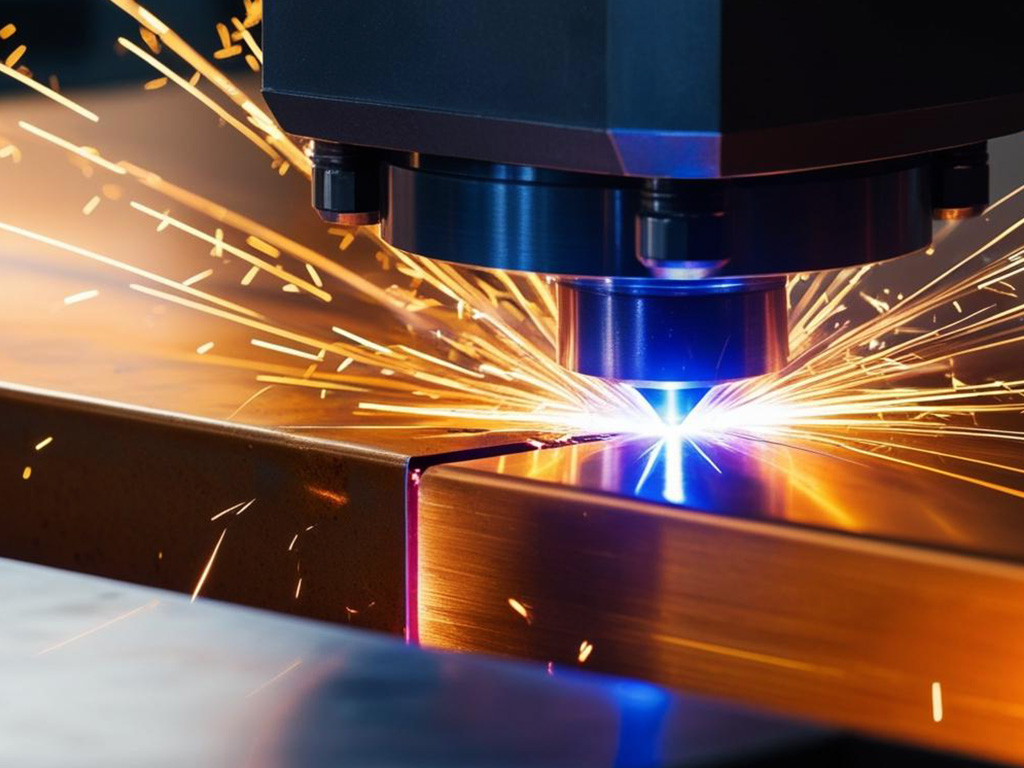
Issue 4: Electricity Costs Excessively High, Air Compressors Become the Largest Energy-Consuming Unit on the Production Line
This isn't a new topic. In many factories, compressed air systems account for 15%-25% of total electricity costs. In laser cutting workshops, due to longer operating times and larger air volumes, this percentage is even higher.
However, many people's calculations are flawed. They only look at the equipment's nameplate power rating, ignoring actual operating efficiency.
A 37kW rated industrial frequency screw air compressor, running continuously for 8000 hours a year, at the global average industrial electricity price of $0.12/kWh, would have an annual electricity cost of approximately: 37 × 0.12 × 8000 = $35,520.
A Grade 1 energy-efficient permanent magnet inverter compressor, under the same operating conditions, saves approximately 30%-35% of electricity annually, which translates to savings of $10,000 to $12,000 per year. The electricity savings over two years would be enough to buy a new machine.
The most easily overlooked cost here is unloading losses. When a line frequency gas turbine is under loading and unloading, the motor continues to rotate during unloading, consuming approximately 30%-40% of the no-load current compared to full load; this energy is completely wasted. Permanent magnet variable frequency models, however, adjust the speed in real-time according to gas consumption, resulting in near-zero unloading losses.
Issue 5: Frequent minor malfunctions and a backlog of maintenance work orders affect overall equipment efficiency.
This is a complex issue. The compressed air system involves the screw air compressor, dryer, filter, air tank, and piping; a problem in any of these components will affect cutting quality.
We analyzed data from 32 laser cutting users worldwide served between 2023 and 2024. Common screw air compressor-related problems, ranked by frequency of occurrence, are:
- Belt slippage or breakage (29%)
- Oil separator blockage leading to excessive pressure differential (24%)
- Temperature control valve malfunction causing high-temperature shutdown (16%)
- Intake valve malfunction (13%)
- Motor bearing wear and abnormal noise (10%)
- Controller-related issues (8%)
Belt and valve problems account for more than half of these. These issues are largely absent in the simpler permanent magnet direct-drive models.
The problems mentioned above have repeatedly occurred on production lines in different countries and regions. Currently, the most mature solution in the industry is to replace the old-style fixed-frequency or traction-drive housings with energy-efficient permanent magnet variable frequency direct-drive screw air compressors.
This doesn't mean that this series of housings is completely fault-free, but rather that its design avoids several major failure points: eliminating traction drive, eliminating unloading with variable frequency control, and using intelligent maintenance control to maintain exhaust stability. IE5 energy efficiency grade permanent magnet motors themselves generate little heat but have a relatively high failure rate.
We conducted a comparative study on three laser cutting production lines in Vietnam, Mexico, and Turkey under identical operating conditions: after using permanent magnet variable frequency housings, unplanned compressed air-related incidents decreased by at least 76%, annual electricity costs decreased by 30%-34%, and cutting quality-related complaints decreased by more than 60%.
The data in this article comes from multiple sets of on-site measurements and user feedback statistics; results may vary under different operating conditions and environmental circumstances.
If you are currently experiencing compressed air issues, please send us your current operating parameters—air consumption, pressure requirements, existing equipment models, and number of cutting machines. Our technical team can provide a free energy consumption analysis and troubleshooting. Contact information is available in the form on this page; a solution will be provided within 24 hours.