
- English
- 简体中文
- tiếng Việt
- Indonesia
- שפה עברית
- Hrvatski
- Malti
- lugha ya Kiswahili
- Hausa
- Монгол хэл
- O'zbek
- Հայերեն
- Español
- Português
- русский
- Français
- 日本語
- Deutsch
- Italiano
- Nederlands
- ภาษาไทย
- Polski
- 한국어
- Svenska
- magyar
- Malay
- বাংলা ভাষার
- Dansk
- Suomi
- हिन्दी
- Pilipino
- Türkçe
- Gaeilge
- العربية
- Norsk
- český
- ελληνικά
- український
- Javanese
- فارسی
- Burmese
- български
- ລາວ
- Azərbaycan
- Slovenský jazyk
- Lietuvos
- Eesti Keel
- Română
- Slovenski
- தமிழ்

Are single-stage or multi-stage oil-free screw blowers right for your process?
As industries continue to focus on reducing energy consumption and maintaining clean air quality, GESO Oil-Free Screw Blowers are increasingly being evaluated for applications ranging from wastewater treatment to food processing and advanced manufacturing. In modern industrial operations, choosing the right air delivery system has become a critical factor in energy efficiency, operational stability, and long-term production performance.
The Growing Importance of Oil-Free Air Systems
Industrial facilities today face a common challenge: how to deliver consistent airflow while controlling operating costs and avoiding contamination risks. Traditional blower technologies can sometimes struggle to balance efficiency, reliability, and air purity, particularly in environments where clean compressed air is essential.
This is where oil-free screw technology has gained significant attention. By eliminating the possibility of lubricant contamination in the compression chamber, oil-free systems help maintain cleaner production environments while supporting increasingly strict environmental and quality requirements.
However, when selecting an oil-free blower, a common question arises:
Should a process use a single-stage or a multi-stage oil-free screw blower?
The answer depends largely on operating pressure, airflow demand, energy targets, and long-term production requirements.
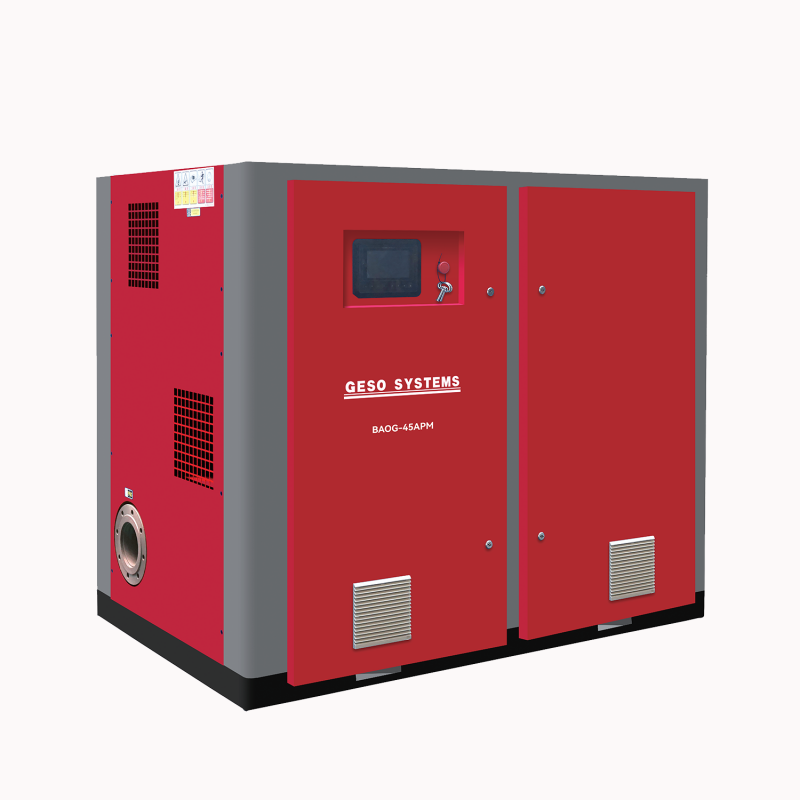
Understanding the Difference
Before comparing the two options, it helps to understand how each design works.
Single-Stage Oil-Free Screw Blowers
A single-stage design compresses air through one compression process before discharge. The airflow path is relatively simple, resulting in a compact structure and straightforward operation.
Typical characteristics include:
- Lower equipment complexity
- Easier installation
- Reduced maintenance requirements
- Suitable for moderate pressure applications
- Lower initial system investment
Single-stage units are often selected for facilities where airflow requirements remain relatively stable and pressure demands are not exceptionally high.
Multi-Stage Oil-Free Screw Blowers
A multi-stage design compresses air through two or more compression stages. Each stage gradually increases pressure, improving compression efficiency under certain operating conditions.
Key advantages often include:
- Higher pressure capability
- Improved efficiency at demanding operating points
- Better performance during continuous heavy-duty operation
- Enhanced adaptability to complex industrial processes
Although the design is more sophisticated, many large industrial facilities consider multi-stage systems when long operating hours and higher pressure requirements justify the investment.
Comparing Single-Stage and Multi-Stage Systems
The following table provides a simplified comparison.
| Feature | Single-Stage System | Multi-Stage System |
| Compression Process | One stage | Multiple stages |
| Equipment Structure | Simpler | More complex |
| Initial Installation | Easier | More detailed planning required |
| Pressure Capability | Moderate | Higher |
| Energy Performance at High Loads | Good | Often better |
| Maintenance Complexity | Lower | Moderate |
| Best Application Type | Stable operating conditions | Continuous demanding operations |
| Space Requirements | Compact | Larger footprint possible |
Neither option is universally better. The most suitable choice depends on process requirements rather than equipment specifications alone.
Common Industry Pain Points and How Technology Addresses Them
Rising Energy Costs
For many facilities, electricity consumption represents the largest portion of blower lifecycle expenses.
Industry studies frequently show that energy costs can account for more than 80% of a blower's total operating expenditure over its lifespan. As a result, even small efficiency improvements can create meaningful savings.
It increasingly incorporate:
- Variable frequency drive (VFD) technology
- Intelligent load matching
- Permanent magnet motor systems
- Advanced rotor profile designs
These innovations help adjust airflow output according to real-time demand rather than operating continuously at maximum capacity.
Air Quality Concerns
Industries such as food production, pharmaceuticals, electronics, and healthcare often require strict control over air purity.
Even trace levels of oil contamination may lead to:
- Product quality issues
- Additional filtration requirements
- Equipment cleaning costs
- Regulatory compliance challenges
Oil-free compression technology helps reduce these concerns by keeping lubricating oil separate from the air compression chamber.
Noise and Vibration Challenges
Facilities located near office spaces, urban environments, or sensitive production areas often face pressure to reduce equipment noise.
Traditional blower technologies may generate vibration due to pulsating airflow and mechanical characteristics.
Modern Oil-Free Screw Blowers designs with internal compression can provide smoother airflow delivery, helping reduce vibration and operating noise while improving workplace comfort.
Which Industries Typically Choose Single-Stage Systems?
Single-stage configurations are commonly found in applications where airflow demand is relatively predictable.
Examples include:
Wastewater Treatment Plants
Aeration systems often operate continuously but may not require extremely high discharge pressures.
Benefits include:
- Reliable airflow supply
- Simple operation
- Lower maintenance demands
Food Processing Facilities
Clean air requirements are critical, while pressure requirements may remain moderate.
Single-stage systems can support:
- Packaging operations
- Material conveying
- Process air applications
General Manufacturing
Many assembly and production facilities prioritize dependable operation and manageable operating costs.
When pressure demands remain within normal ranges, a single-stage solution often delivers balanced performance.
Where Do Multi-Stage Systems Excel?
Multi-stage systems tend to shine when industrial processes become more demanding.
Chemical Processing
Certain chemical production lines require higher pressures and highly stable airflow conditions.
Multi-stage compression can help maintain consistent performance under varying process loads.
Mining Operations
Mining environments often present challenging operating conditions, including:
- Continuous operation
- Heavy airflow requirements
- Remote installation locations
Multi-stage systems can provide additional performance reserves where operating demands remain high.
Power Generation
Many power facilities rely on dependable air systems for critical operational processes.
The improved efficiency achieved under higher pressure conditions can become increasingly valuable during long-term operation.
Why Variable Frequency Control Is Changing the Discussion
Historically, blower selection focused primarily on airflow and pressure ratings.
Today, energy management has become equally important.
A growing number of facilities experience fluctuating demand throughout:
- Daily production cycles
- Weekly scheduling changes
- Seasonal variations
- Capacity expansion phases
Variable frequency control allows blower output to automatically match actual demand.
Rather than operating at full speed continuously, the system of Oil-Free Screw Blowers adjusts motor speed based on process requirements.
This can offer several advantages:
- Reduced electricity consumption
- Lower mechanical stress
- Longer equipment life
- Improved operational flexibility
For organizations pursuing sustainability targets, this capability is increasingly becoming a deciding factor.
Looking Beyond Initial Purchase Decisions
One of the most common mistakes in blower selection is focusing only on initial equipment cost.
Experienced engineering teams often evaluate:
- Total lifecycle cost
- Energy consumption
- Maintenance requirements
- Downtime risks
- Future expansion capability
In many cases, the lowest upfront cost does not necessarily produce the lowest long-term operating expense.
A properly matched blower system can continue delivering efficiency benefits for many years after installation.
Emerging Trends in Oil-Free Blower Technology
Several trends are shaping the future of industrial air systems.
Smart Monitoring
Modern systems increasingly feature:
- Remote diagnostics
- Real-time performance tracking
- Predictive maintenance alerts
- Energy consumption analytics
High-Efficiency Motor Integration
Permanent magnet motor technology continues to gain popularity due to:
- Higher efficiency levels
- Faster response times
- Improved part-load performance
Sustainability Objectives
As industries seek lower carbon footprints, energy-efficient Screw Blowers are becoming part of broader environmental strategies.
Reducing power consumption not only lowers operating costs but also contributes to sustainability initiatives across multiple sectors.
Making the Right Choice
The decision between single-stage and multi-stage systems should begin with a clear understanding of process requirements rather than product categories.
Facilities with stable airflow needs and moderate pressure demands may find a single-stage solution highly effective. Operations requiring higher pressures, extended continuous operation, or greater efficiency under demanding conditions may benefit from a multi-stage approach.
Careful evaluation of airflow profiles, energy objectives, maintenance expectations, and future production plans remains the most reliable path toward selecting the right technology.
As industrial facilities continue to pursue cleaner air systems and greater energy efficiency, Oil-Free Screw Blowers are expected to play an increasingly important role across sectors. Through advanced compression technology, intelligent control systems, and oil-free operation, GESO continues contributing to the evolution of reliable industrial airflow solutions while supporting diverse production environments worldwide.