- English
- 简体中文
- tiếng Việt
- Indonesia
- שפה עברית
- Hrvatski
- Malti
- lugha ya Kiswahili
- Hausa
- Монгол хэл
- O'zbek
- Հայերեն
- Español
- Português
- русский
- Français
- 日本語
- Deutsch
- Italiano
- Nederlands
- ภาษาไทย
- Polski
- 한국어
- Svenska
- magyar
- Malay
- বাংলা ভাষার
- Dansk
- Suomi
- हिन्दी
- Pilipino
- Türkçe
- Gaeilge
- العربية
- Norsk
- český
- ελληνικά
- український
- Javanese
- فارسی
- Burmese
- български
- ລາວ
- Azərbaycan
- Slovenský jazyk
- Lietuvos
- Eesti Keel
- Română
- Slovenski
- தமிழ்

Applications, advantages, and standards of screw air compressors in the food and beverage industry.
In the entire food and beverage industry, air compressors are used throughout the entire production process. From initial processing to finished product packaging, air compressors play an irreplaceable role in ensuring production safety, efficiency, and quality. This article will explain the application of air compressors in food and beverage production, the advantages of different types, and the standards that air compressors should meet in the food industry to popularize the role of air compressors in food and beverage production.
I. Applications of Air Compressors in the Food and Beverage Industry
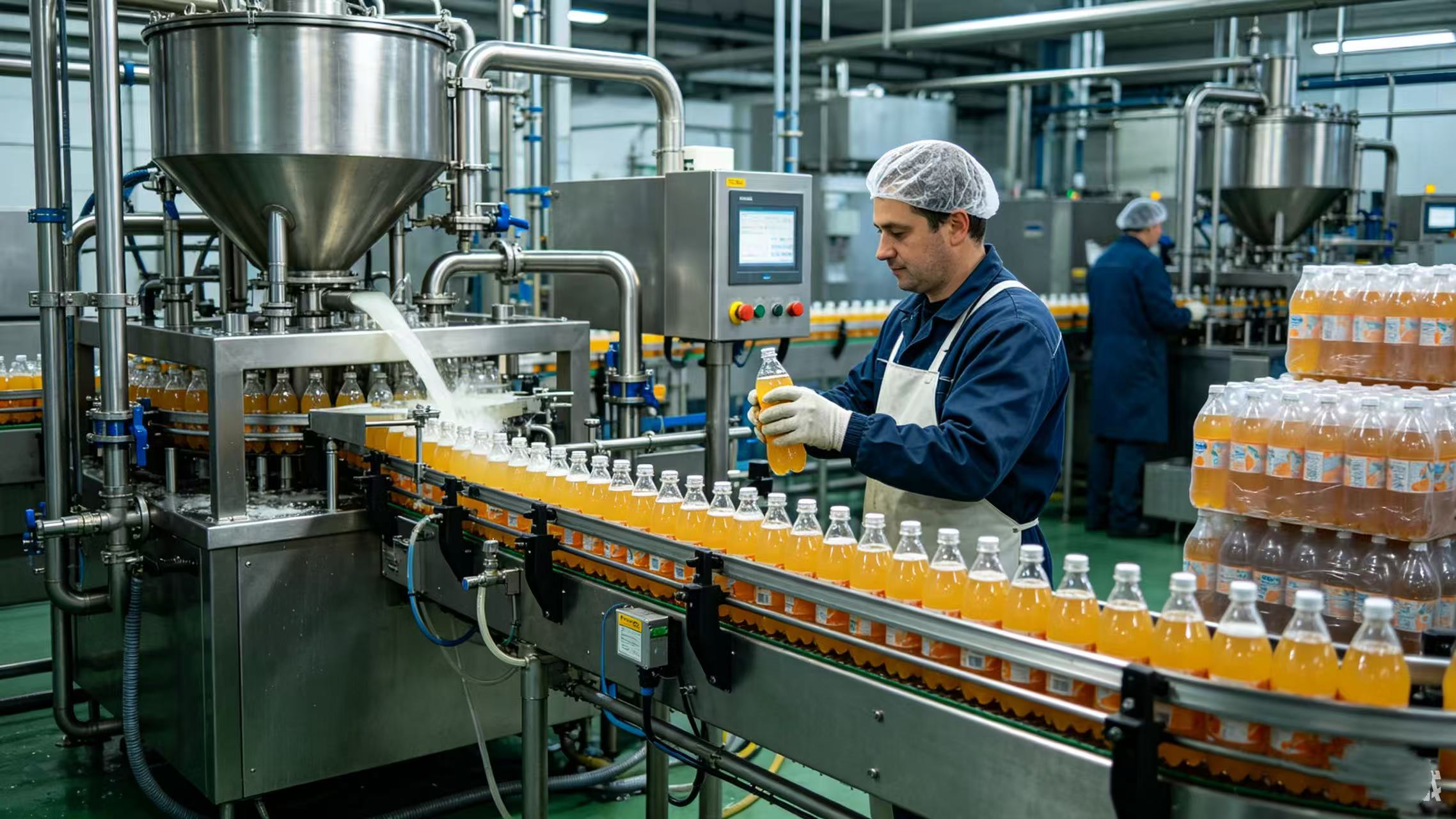
Air compressors are used in food and beverage production processes, such as fermentation, cleaning, spraying, cooling, packaging, aeration, filling, capping, PET blow molding, and transportation. We will introduce how air compressors are used in the food and beverage industry through several common applications.
1. Preparation of ingredients before production: Since a variety of ingredients are involved in the preparation process, an air compressor is needed to mix them in order to ensure the consistency of the ingredients.
2. Food Cooling and Freezing:Food processing typically involves high temperatures. Therefore, to improve production efficiency and expedite subsequent processes, air compressors are used to cool the hot food. Furthermore, to prevent spoilage, air compressors are also used to freeze and preserve processed food.
3. Nitrogen production in food preservation: Nitrogen is indispensable in the food preservation process, and the production of nitrogen also requires the participation of an air compressor.
4.Waste removal in food production: During the food production process, a large amount of waste is usually generated. In order to ensure the quality of food production, air compressors are usually needed to clean up this waste.
5. Food Packaging Process: During the food packaging process, the packaging machine, as the main force in food packaging, also needs the power of the air compressor to ensure better sealing and preservation of the food.
II. Advantages of Different Types of Air Compressors in the Food and Beverage Industry
Before comparing different types of air compressors, a brief introduction to air compressor quality is necessary. To ensure the safety of food, beverages, and consumers, the food and beverage industry requires strict hygiene standards. During air compression, moisture and some contaminants are unavoidable. To prevent these contaminants from entering food production and to avoid unexpected cost increases, high-quality oil-free air compressors are required. There are many types of air compressors, but the most commonly used in the food and beverage industry are screw air compressors and scroll air compressors. What are the advantages of these two types of air compressors? We will analyze them for you below.
1. Oil-free screw air compressor:Supports extreme climatic conditions and can be used in special locations, such as industries where chemicals are prohibited, without posing a danger.
Generates less heat: Due to the lower heat generated, oil-free screw air compressors effectively extend the service life of the entire unit.
Easy maintenance: Compared to other air compressor units, oil-free screw air compressors have fewer parts, making maintenance easier and significantly reducing maintenance costs.
Low noise: While oil-free screw air compressors tend to be noisier due to their larger airflow, Geso air compressors employ noise reduction technology to effectively reduce operating noise, ensuring a quiet working environment for operators.
2. Oil-free scroll air compressor:Ultra-Energy-Saving Technology: Geso oil-free scroll air compressors employ highly efficient energy-saving technology. The system adjusts the compressor pump according to your needs, saving excess air produced by the compressor, thereby saving electricity costs and extending the compressor's lifespan.
Flexible and Convenient Design: Typically, oil-free scroll air compressors feature a compact design, small and elegant, requiring less floor space and effectively saving you room.
III. Selecting an air compressor that meets the production standards of the food and beverage industry.
1. Air Compressor Selection:If your industry is food and beverage, you need to consider the following factors: the production scale to which the air compressor will be used, the food production process, and your production volume. Besides these factors, what else do you need to consider? Firstly, the quality of the compressed air, energy efficiency, noise level, fluctuations in usage demand, and subsequent maintenance.
2. Geso Air Compressor Standards: Ensuring Compressed Air Quality for the Food Industry: We understand that clean compressed air is crucial for the food and beverage industry. Therefore, our air compressors adhere to the international ISO 8573-1 classification standard for food requirements. This standard rigorously classifies the moisture, oil, and other fine particles contained in the air, with each quantifiable level.